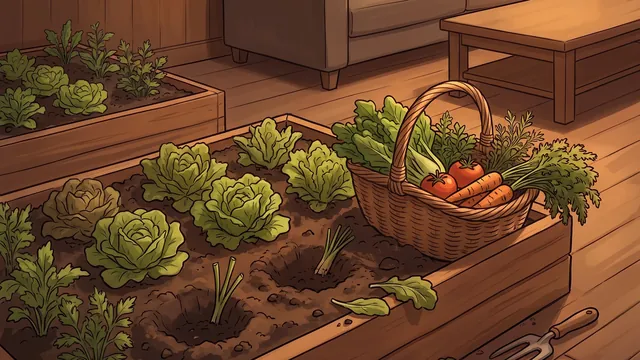
A stockpile and nothing built
Buy the appliance and cook what you already own. Nothing else you can build turns 48 Satiety of ingredients into more Satiety. Check the dish before you commit the ingredients, though: the losing recipes are mostly drinks, and Cappuccino turns 18 Satiety of ingredients into 5. How cooking works has the quality rules.
Rooms to spare, Trapping still low
Plant mushrooms in the darkest room. 9 crops need no light at all, 8 of them return Satiety, and they are the bait profile that favours the heaviest prey. Do not fill the trap placements yet: at Trapping 0 a Simple Mousetrap returns 0.84 Satiety per dollar against 2.50 for White Sugar Food · Seasonings Satiety +5 Morale -1 500 g 2×1 cells 50.0 Satiety/kg $10 360 d shelf life Waste at day 1800 Seasonings Cook or use directly on the shelf.
Trapping 5 and planter space
Now fill every placement: 101 Satiety a day, and 4.52 Satiety per dollar of trap, which finally beats the shelf. Give the lit planter cells to the crops that pay Morale rather than the ones that pay the most Satiety. Watermelon is 30 Morale and 60 Satiety in one unit.
Open the recipes list Every recipe with the Satiety of its result at each quality. This opens on Hot and Sour Potato Shreds, the best conversion in the game at Normal: 3.5 Satiety of ingredients into 27.
They are not really alternatives. Trapping and farming make raw ingredients; cooking decides what those ingredients are worth. But the three do not trade off evenly, and two of the reasons usually given for cooking first do not survive the tables.
The three systems side by side
| System | What it does | Space it needs | Returns | Pays Morale |
|---|---|---|---|---|
| Cooking | Multiplies ingredients | One appliance | 1.28× to 2.15× the Satiety put in, on average | Yes, 6.7 at Normal |
| Trapping | Produces raw food | 11 placements | 70 Satiety a day | No, all 19 prey are negative raw |
| Farming | Produces raw food | 15 pot cells for a day | 3.38 Satiety per cell a day | Yes, 7 crops, up to 30 |
Trapping is the only one of the three that pays no Morale at all. Every one of the 19 animals a trap can catch is negative eaten raw, averaging -4.1, and 0 of them pay anything. That is the honest version of a claim this page used to make about cooking, and it is worth stating the right way round, because Morale decides whether a run holds together.
![[Main Quest] Cook a Hot Meal](/art/1301_g.webp)
Why cooking comes first
| Result | Satiety returned | Morale returned |
|---|---|---|
| Failed | 0.61× what went in | +2.4 |
| Normal | 1.28× what went in | +6.7 |
| Good | 1.70× what went in | +8.6 |
| Perfect | 2.15× what went in | +10.2 |
Cooking is where Morale comes from cheaply. The same ingredients eaten raw average -2.8 Morale between them. Cooked, they return 6.7 at Normal and 10.2 at Perfect, a swing of 9.4 points per meal. Farming reaches higher on a single item, but it needs 6.2 days of growth and 4 pot cells to get there. Cooking pays that Morale on the food already in the bag.
The average is not the promise. The 1.28× above is the mean across every measured recipe, and the spread behind it is wide enough that the mean alone would mislead you.
| Result | Recipes measured | Return more than went in | Return the same | Return less | Median |
|---|---|---|---|---|---|
| Normal | 380 | 263 | 43 | 74 | 1.11× |
| Perfect | 380 | 372 | 0 | 8 | 1.74× |
At Normal the median recipe returns 1.11×, not 1.28×, and 117 of 380 recipes give you nothing or lose you Satiety. The mean is pulled up by a handful of very cheap conversions: Hot and Sour Potato Shreds turns 3.5 Satiety into 27, 7.7×. At the other end Cappuccino turns 18 into 5. So cook, but read the result before you commit expensive ingredients to it.
At Perfect the picture is much cleaner: 372 of 380 gain, and only 8 still lose. That is the real argument for levelling Cooking rather than just owning a stove.
The caution is the bottom row of the tier table. A failed dish returns 0.61×, destroying about 39% of the Satiety you put in, which is why the quality rules matter before you start cooking your reserves.
Why trapping comes second
Trapping returns the most food per unit of space of the two producers. Your house has 11 trap placements; filled with the right trap for each room they return 70 Satiety a day, 1.5× the daily bill, rising to 101 at Trapping 5.
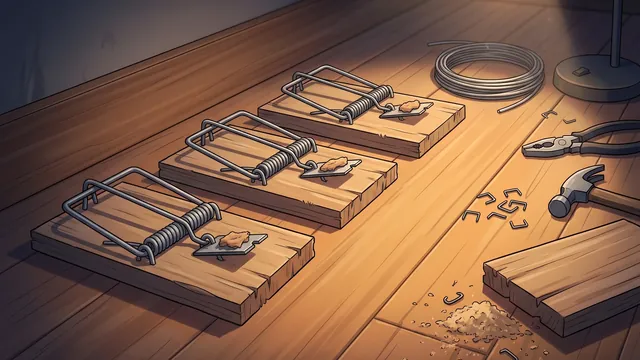
The catch is the durability. Simple Mousetrap Trap 500 g 1×1 cells $20 Keeps indefinitely A coiled spring and a trigger plate. The simplest mechanisms are often the most effective. costs $20 and survives 4 captures at Trapping 0, so over its whole life it returns 17 Satiety, or 0.84 per dollar. The richest food per dollar on any shelf, White Sugar Food · Seasonings Satiety +5 Morale -1 500 g 2×1 cells 50.0 Satiety/kg $10 360 d shelf life Waste at day 1800 Seasonings Cook or use directly , is worth 2.50, 3.0× as much. At Trapping 5 the same trap survives 16 captures and returns 4.52 per dollar, and the shelf loses.
So trapping is second because the skill, not the purchase, is what makes it pay, and because everything it catches costs Morale eaten raw and has to go through the kitchen anyway. Build the traps while you level, not before. Where each trap goes matters more than which trap you buy.
Why farming comes last, with two exceptions
Farming is the most space-hungry of the three. The highest-yielding crop returns 3.38 Satiety per pot cell per day, so covering Wage Slave’s 48 takes about 15 cells producing without a break, against 11 trap placements that already cover more than a day.
| Producer | One unit | Satiety a day | Needs light |
|---|---|---|---|
| Trapping | One placement | 6.39 | No |
| Farming | One pot cell | 3.38 | Most crops, yes |
The first exception is the dark room. 9 crops grow with no light at all, and all of them are mushrooms. 8 of those return Satiety, which makes them the only thing a windowless room can produce, and they carry the bait profile that favours the heaviest prey. A dark room of mushrooms is not competing with your traps, it is feeding them.
The second exception is Morale. 7 crops produce food that pays Morale eaten raw, which is something no trap does at all, and it arrives without a shop trip or a stove.
| Crop | Morale a unit | Satiety a unit | Satiety per cell a day | Grow days |
|---|---|---|---|---|
| Watermelon | +30 | 60 | 2.43 | 6.2 |
| Cucumber | +4 | 14 | 2.2 | 4.8 |
| Carrot | +4 | 14 | 1.65 | 4.3 |
| Tomato | +3 | 10 | 2.98 | 5 |
| Strawberry | +3 | 2 | 1.69 | 3.6 |
| Onion | +1 | 9 | 1.63 | 5.5 |
| Garlic | +1 | 8 | 1.25 | 6.4 |
Watermelon Food · Fruit Satiety +60 Morale +30 Life +5 4000 g 2×2 cells 15.0 Satiety/kg $120 10 d shelf life Waste at day 30 Fruit Cut and ready-to-eat. Sweet and thirst-quenching. is the outlier: 30 Morale and 60 Satiety from one unit, 2.9× the 10.2 an average Perfect dish returns. It costs 4 pot cells and 6.2 days to get one, which is why it is a treat rather than a supply. The kitchen still holds the ceiling, though: the richest cooked result in the game is Summer Fruit Salad (Perfect) at 57 Morale. What the crop table changes is that farming pays Morale at all, which this page used to say it did not.

So the honest case for farming early is not as a food supply. It is bait, Morale, and a use for rooms that can do nothing else. As a food supply it starts to matter once you have the planter space to run 15 cells at once.
Open the crops list All 34 crops ranked on the same per-cell-per-day measure used here, with light, cold and grow time on each. This opens on Watermelon, the crop that pays the most Morale.
The order, and what each step costs
| Order | Build | What it needs | What you get |
|---|---|---|---|
| 1 | An appliance and seasonings | Cooking levels for the quality floor | 1.28× to 2.15× on the average meal, and 6.7 Morale a dish |
| 2 | Mushrooms in a dark room | Seeds and a planter | Bait, plus food from a room that has no other use |
| 3 | Traps, room by room | Trapping 5, or the shelf is cheaper | Up to 101 Satiety a day |
| 4 | Lit cells for Morale crops | 4 cells and 6.2 days for one Watermelon | +30 Morale a unit |
| 5 | Planters for food | Roughly 15 cells and the light for them | 3.38 Satiety per cell a day |
What to do
- Cook before you eat, but read the result first. The average recipe returns 1.28× at Normal and the median 1.11×, yet 74 of 380 return less than went in.
- Do not cook your reserves until you can clear Normal reliably. A failed dish destroys 39% of what went in.
- Plant mushrooms in the darkest room you have. They cost nothing in light and they are the bait that draws the heaviest prey.
- Level Trapping to 5 before filling every placement. Below it a trap returns 0.84 Satiety per dollar and the shelf returns 2.50, so you are paying more for the same food.
- Spend your first lit cells on Morale rather than Satiety. Watermelon Food · Fruit Satiety +60 Morale +30 Life +5 4000 g 2×2 cells 15.0 Satiety/kg $120 10 d shelf life Waste at day 30 Fruit Cut and ready-to-eat. Sweet and thirst-quenching. gives 30 Morale a unit, 2.9× what an average Perfect dish gives, and no trap pays Morale at all.
- Leave general farming until you have planter space to spare. 15 cells is a lot of room to find for one day of food.
Quick reference
- Cooking: 1.28× Satiety at Normal on average, 1.11× at the median, 2.15× at Perfect, 0.61× on a failure.
- Not every recipe gains: 263 of 380 gain at Normal, 372 at Perfect.
- Morale: ingredients -2.8 raw, 6.7 to 10.2 cooked.
- Trapping pays no Morale: all 19 prey are negative, averaging -4.1.
- Farming does pay Morale: 7 crops, up to 30 a unit from Watermelon.
- Trapping: 11 placements, 70 Satiety a day, 101 at Trapping 5; 0.84 Satiety per dollar of trap at Trapping 0 against 2.50 on the shelf.
- Farming: 3.38 Satiety per cell a day; about 15 cells for one day of food.
- Mushrooms: 9 crops that need no light, and the bait that draws the richest prey.