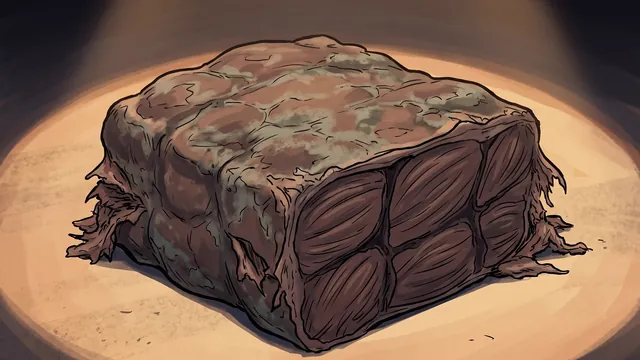
Nothing cold to put it in
Shop on the second date. The shelf life says when the food stops being fresh; the spoil day says when it stops existing, and only one of those ends a stockpile. White Sugar returns 2.50 Satiety per dollar and Hot Dog 2.00, half a Satiety a dollar apart, while White Sugar lasts 1548 to 1656 days from checkout against 3.8 to 4.4 for the Hot Dog. The date separates them; the price does not. Of the 122 dated foods a shop sells, 61 are gone inside ten days.
A fridge and the power to run it
Fill it before you buy anything else. All 3 cold stores multiply shelf life by the same 5, and the multiplier lands on the whole clock, so the spoil day moves out with it. The Fridge is $40 and draws 2 constantly. The game warns you when that draw stops: "Refrigerator power is out. Food will spoil faster." (powering the house has what a constant draw needs).
Stock already past its date
Read the multiple, not the days. Divide its age by its shelf life: under 1.5 times the illness chance is 20% and worth taking against going hungry, and at 3 times and over it is 100% and no longer a bet. What you are risking is one of 5 illnesses, each lasting 24 hours, and 2 of them say they interrupt whatever you are doing.
Open the supplies list Every supply's shelf life beside the day it spoils for good. This opens on Canned Luncheon Meat, which carries the longest clock a shop sells for the money.
Nothing on this page is about whether a food is good. It is about the two dates it carries and the 4 bands between them. What a supply is worth has the six values an item carries and the spoil ladder they share; this page has the calendar.
Three sets, and they are not the same set
“Perishable” is one word for three different counts, and which one you mean changes the answer.
| What the item carries | What it decides | Items |
|---|---|---|
| A shelf life in days | The printed date, after which the item reads as expired | 202 |
| A spoil ladder | Which illness eating it late can give you | 197 |
| A spoil day and Basic Fertilizer | When it stops being food, and what is left | 186 |
The first gap is medicine. All 186 foods with a date leave Basic Fertilizer Fertilizer Satiety +10 200 g 1×1 cells 50.0 Satiety/kg $3 Keeps indefinitely Speed +30% behind. The other 16 items with a date sit outside the food category, and not one of them carries a spoil day at all: they read as expired, they never become fertiliser, and they never leave your bag on their own. 15 of those 16 still carry a spoil ladder, so an out-of-date pill can still make you ill.
The second gap is at the other end. 4 foods spoil on the day they expire, with no window after it at all, and all 4 are what a trap catches: Mouse (Dead), Rat (Dead), Black Rat (Dead), Gray Rat (Dead). Nothing you catch keeps.
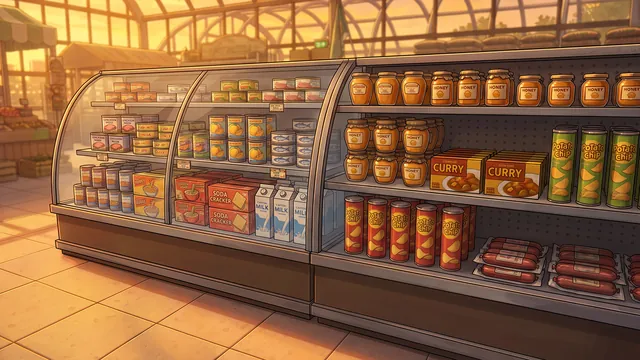
The spoil day is a multiple, and the multiple is per item
The shelf life is printed. The spoil day is that number multiplied by a factor the item carries of its own, so two foods with the same date can behave nothing alike. The bag shows both: past the date it reads "Expired" and counts down the days it has left, and when they run out the label changes to "Spoiled".
10 days is the shelf life a shop sells across the most different factors. Here is what that one number turns into on the shelf.
| Item | Shelf life | Spoils for good | Days past the date |
|---|---|---|---|
| Cauliflower | 10 d | day 15 | 5 |
| Sunflower Seeds | 10 d | day 20 | 10 |
| Pumpkin | 10 d | day 25 | 15 |
| Watermelon | 10 d | day 30 | 20 |
Same printed date on all 4, and the last of them keeps 4.0 times as long past that date as the first: 5 days against 20. Nothing on the label tells you which is which. The supplies list prints the answer under “Spoils for good” rather than making you multiply.
The bands, and how many foods ever reach them
Past the shelf life the chance of illness steps up at fixed multiples of that same shelf life. The multiples are the game’s own and they are identical for every item; only the days they land on differ.
| How far past the date | Illness chance | Items that reach it |
|---|---|---|
| 1 to 1.5 times shelf life | 20% | 182 of 202 |
| 1.5 to 2 times shelf life | 40% | 146 of 202 |
| 2 to 3 times shelf life | 80% | 84 of 202 |
| over 3 times shelf life | 100% | 49 of 202 |
Most food spoils before it gets dangerous. Only 49 of the 202 dated items carry a spoil factor high enough to reach the 100% band at all; the other 153 turn into fertiliser first. So the bottom of that table is a warning about a minority of the list, and it is mostly the tins and the dry goods, the very things whose bands sit months away.
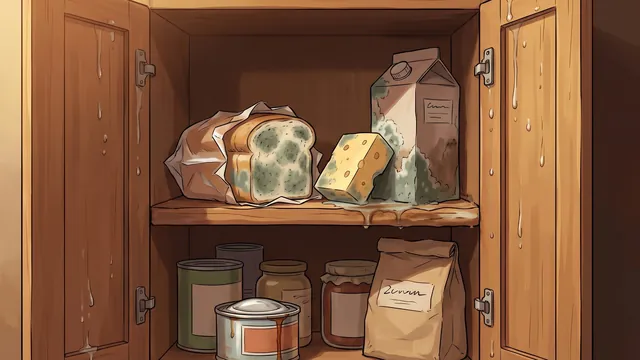
What the illness costs
Eating something past its date draws from one shared ladder of 5 illnesses. What a supply is worth has the ladder itself and how many items share it. What it costs is here.
| Illness | What it does | Lasts |
|---|---|---|
| Diarrhea | Lose 3 Satiety every 3 hours; guaranteed to interrupt current actions every 6 hours and trigger Diarrhea once. Lasts for 24 hours. | 24 h |
| Stomachache | Lose 3 Morale and 2 Life every 3 hours for 24 hours. | 24 h |
| Vomiting | Lose 3 Satiety and 3 Stamina every 3 hours; guaranteed to interrupt current actions every 6 hours and trigger Vomiting once. Lasts for 24 hours. | 24 h |
| Fever | Lose 2 Morale, 2 Stamina and 2 Life every 2 hours for 24 hours. | 24 h |
| Poisoned | Lose 2 Stamina and 3 Life every 2 hours for 24 hours. | 24 h |
They all run for the same 24 hours, so what separates them is what they take. Diarrhea and Vomiting are the two that say they interrupt what you are doing, and that is the part that costs more than the stat: a few points of Satiety back is survivable, being pulled out of a scavenging trip is hours you had planned. Every one of the 5 has something that removes it, and when you are sick has which medicine and how much to stock. Any of them reads in full on the effects list, for example Diarrhea.
What moves the clock
Two kinds of furniture change the shelf life itself, in opposite directions, and both kinds are stocked.
| Piece | Price | What it does to the clock | Power | Cells |
|---|---|---|---|---|
| Fridge | $40 | 5 times longer | 2 | 56 |
| Double-Door Fridge | $50 | 5 times longer | 2 | 56 |
| Freezer | $100 | 5 times longer | 6 | 80 |
| Compost Bin | $20 | 5 times faster | none | 36 |
| Brewing Barrel | $100 | 5 times faster | none | 36 |
A cold store is the single biggest thing you can do about this page. Multiplying shelf life by 5 multiplies the spoil day with it, so a food that had days on it has weeks. All 3 of them do it by the same amount, and the game says so at the switch: "Extends food shelf life (x5 multiplier)". Which one to buy is a question about power and cells, not about food, and powering the house answers it.
The other 2 run the clock backwards on purpose. The Compost Bin is $20, draws no power, holds 36 cells, and spoils what is in it 5 times faster. That is the fast route to Basic Fertilizer Fertilizer Satiety +10 200 g 1×1 cells 50.0 Satiety/kg $3 Keeps indefinitely Speed +30% and worth a slot for it: food you were going to lose anyway becomes the thing that takes time off a crop, and it becomes it sooner. How growing works has what the fertiliser is worth in the pot.
Ration Press is the one thing that stops the clock, and no shop stocks it. Its own description says what it does: "Dump everything you can't finish and can't cook into the press hopper, and it comes back out as rations that keep for a month. Six-tenths of the nutrition stays, the water gets squeezed out, and every block comes to half a kilo." It is built rather than bought, and it turns away anything already gone, and says so in as many words: "the ration press won't take spoiled food". So its window is before the printed date, which is the opposite of how a shelf about to be lost usually gets treated.
Worked examples
Reading the bands off one item
Hot Dog Food · Staple Food Satiety +20 Morale +3 200 g 2×2 cells 100.0 Satiety/kg $10 2 d shelf life Waste at day 5 Staple Food Ready-to-Eat has a 2 day shelf life and a spoil day of 5, so the whole of its overdue window is 3 days long. Its bands land on day 2, day 3, day 4, and then it is gone. It never reaches the 100% band at all, because the spoil day arrives first.
Canned Luncheon Meat Food · Meat Satiety +20 Morale +1 1000 g 2×1 cells 20.0 Satiety/kg $30 360 d shelf life Waste at day 1800 Meat Requires cutting tool to open takes the same bands against a 360 day shelf life, which puts them on day 360, day 540, day 720, day 1080, and it spoils for good on day 1800. That is the real argument for a tin: not that it never spoils, but that its first risky day is further out than the run is long.
What checkout takes off the front
Every shelf hands food over part-used, so the clock to plan against starts at the till, not at the printed number. The ordinary shelf gives 30% to 60% of the shelf life. The days past the date arrive on top of that in full, because the spoil day is measured against the life the item was made with and not against what is left of it.
| Item | Satiety | Shelf life | Spoils for good | Days from checkout | Sat/$ |
|---|---|---|---|---|---|
| Hardtack Food · Staple Food Satiety +20 Morale -3 4000 g 4×3 cells 50.0 Satiety/kg $200 360 d shelf life Waste at day 1800 Staple Food Ready-to-Eat; Hard to Swallow | 20 | 360 d | day 1800 | 1656 to 1728 | 1.00 |
| Canned Luncheon Meat Food · Meat Satiety +20 Morale +1 1000 g 2×1 cells 20.0 Satiety/kg $30 360 d shelf life Waste at day 1800 Meat Requires cutting tool to open | 20 | 360 d | day 1800 | 1656 to 1728 | 0.67 |
| Canned Yellow Peaches Food · Fruit Satiety +20 Morale +3 1000 g 2×2 cells 20.0 Satiety/kg $30 360 d shelf life Waste at day 1800 Fruit Open can and ready-to-eat; quite tasty | 20 | 360 d | day 1800 | 1656 to 1728 | 0.67 |
| Canned Herring Food · Fish Satiety +10 Morale -3 Stamina +10 500 g 1×1 cells 20.0 Satiety/kg $50 360 d shelf life Waste at day 1800 Fish Open Outdoors; Hard to Swallow | 10 | 360 d | day 1800 | 1656 to 1728 | 0.20 |
| White Sugar Food · Seasonings Satiety +5 Morale -1 500 g 2×1 cells 50.0 Satiety/kg $10 360 d shelf life Waste at day 1800 Seasonings Cook or use directly | 5 | 360 d | day 1800 | 1548 to 1656 | 2.50 |
| Cola Food · Soft Drinks Satiety +5 Morale +6 Stamina +8 500 g 1×2 cells 10.0 Satiety/kg $10 360 d shelf life Waste at day 1800 Soft Drinks Open bottle and drink; quite tasty | 5 | 360 d | day 1800 | 1548 to 1656 | 0.50 |
Now the other end of the same list. White Sugar returns 2.50 Satiety per dollar and Hot Dog 2.00, near the top of what any dated food is sold at. White Sugar is 1548 to 1656 days from checkout; Hot Dog is 3.8 to 4.4. Value per dollar cannot tell those two apart and the spoil day can. What you are really buying has which shelves are stalest and which two of them discount.
What to do
- Shop on the spoil day, not the shelf life. The supplies list prints both. Of the 122 dated foods a shop sells, 61 are gone within ten days of checkout even from the freshest shelf that stocks them.
- Buy the Fridge before you buy more food. $40 and 2 power multiplies every date inside it by 5, which no amount of shopping does.
- Past the date, divide before you eat. Age over shelf life. Under 1.5 times is 20% and usually worth it against going hungry; 2 to 3 times is 80% and worth it only when the alternative is worse; over 3 times is 100%, and that is a price rather than a risk.
- Do not save the risk for a day you need. Diarrhea and Vomiting interrupt what you are doing, so a bad roll costs most on exactly the day you meant to travel or defend.
- Put the surplus in the Compost Bin instead of watching it go. $20, no power, and it turns what you were going to lose into Basic Fertilizer 5 times sooner.
- Check any item in the supplies list. Every row carries its shelf life and the day it spoils for good.
The talents that change this
3 permanent talents touch the dates: one slows the clock inside a fridge, one removes what cooking with a spoiled ingredient costs, and one pays you to buy the shortest dates in the shop.
| Talent | First level | All levels | At the top |
|---|---|---|---|
| Clearance | 20 pts | 150 pts | Get a 30% discount when purchasing supplies with a shelf life of less than 5 days. |
| Deep Freeze | 20 pts | 90 pts | Food spoilage rate in Refrigerator reduced by an additional 45%. |
| Mold Master | 20 pts | 90 pts | Quality penalty when cooking with spoiled ingredients reduced by 100%. |
The discount one is the odd member, and it is a shopping talent rather than a spoilage talent: it pays you for taking exactly the dates this page tells you to avoid, so it is worth the points only once something cold is already running. Which talents to buy covers what the tree costs as a whole.
Quick reference
- Two dates per item: a shelf life, then a spoil day at a per-item multiple of it.
- Three sets, not one: 202 items carry a shelf life, 197 carry a spoil ladder, 186 leave Basic Fertilizer.
- Illness chance climbs 20% to 40% to 80% to 100% at 1.5 times, 2 times, 3 times the shelf life.
- Only 49 of 202 dated items ever reach the 100% band; the rest spoil first.
- 5 illnesses, all 24 hours, and 2 of them interrupt what you are doing.
- A cold store multiplies every date inside it by 5, from $40.
- Compost Bin is the opposite on purpose: 5 times faster, for Basic Fertilizer.
- Longest clock a shop sells: Hardtack Food · Staple Food Satiety +20 Morale -3 4000 g 4×3 cells 50.0 Satiety/kg $200 360 d shelf life Waste at day 1800 Staple Food Ready-to-Eat; Hard to Swallow , 1656 to 1728 days from checkout.